The Merger Formula
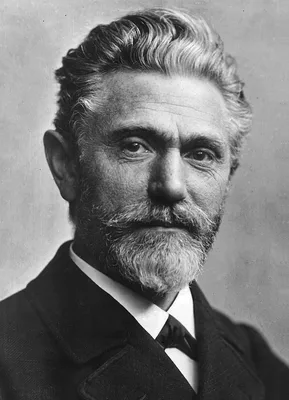
Bebel (German, 1840-1913) was a consummate worker-intellectual. He was seen as proof that the working class would respond to socialist ideas and take up the struggle for socialism and democracy themselves. Bebel partnered with Wilhelm Liebknecht in 1865, joined the First International in 1866, and helped found the SDAP in 1869 and the SAPD (later the SPD) in 1875. His oratorical skill made him a powerful parliamentary speaker and exemplary tribune of the people. In 1899, he attacked Bernstein’s revisionism and urged Kautsky to do the same. He was chairman of the SPD from 1892 until his death.
By 1878, the Socialist Workers’ Party of Germany (SAPD, later the SPD) had 47 local papers and held almost 10 percent of seats in the Reichstag. Bismarck pushed through the anti-socialist law in the Reichstag in June 1878. Between 1878 and 1888, the law was used to shut down trade-union organizations, workers’ insurance societies, and political and social organizations. The party’s cash was confiscated, and further contributions were prohibited. Pub owners and booksellers were forbidden to make their establishments available to socialists. Jail terms were imposed, and hundreds of people were sent into domestic exile. But the party exploited various loopholes and continued sending socialists to the Reichstag, where they often enjoyed the protections of parliamentary immunity and could speak freely. By the time the law was overturned in 1890, the party (now called the SPD) was more popular than ever. According to Gary Steenson, the outlaw period created bonds of solidarity among party members while building a habit of smoothing over differences to present a united movement to the public. The fear of renewed illegality hung over the party for the next several decades.
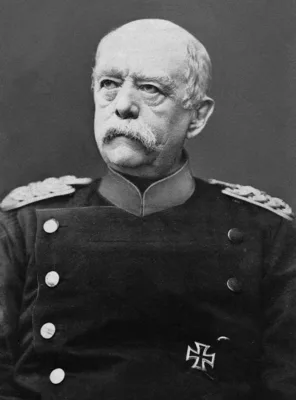
Bismarck (German, 1815-1898) oversaw the unification of Germany by bringing together the many German-speaking states (completed in 1871), and served as the country’s first chancellor. He introduced the anti-socialist law and ruled autocratically through a strong bureaucracy with power concentrated in the hands of the Prussian landowning class: the Junkers. He’s credited with developing the first welfare state, an attempt to counter the growing Social Democratic movement. He was dismissed as Chancellor by Wilhelm II in 1890, the same year the SPD won a record number of votes.
Chartism was the largest working-class movement in 19th-century British history. It lasted from 1838 to 1857, but was strongest during specific periods. The People’s Charter called for six reforms to Britain’s political system: a vote for every man over the age of 21, secret ballots, no property qualifications, payment of MP’s, constituencies of equal size, and annual parliaments. Engels argued that in the context of industrial Britain with a large working class, the Chartists’ victory and enactment of universal and equal male suffrage would have meant working-class political rule. However, Chartism lacked a socialist understanding of the development of capitalism, the immiseration of industrial workers, and the need for a classless society. Hence, the need to merge Chartism with socialism. Dorothy Thompson, Michael Mann, and Marx and Engels all wrote about the Chartists.
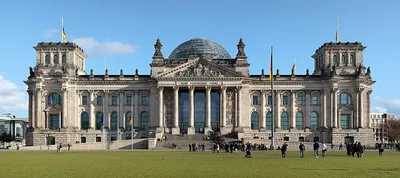
The German Reichstag was the lower house of Parliament from 1871 until 1918. It was under the upper house (the Bundesrat), the monarch, and the Reich Chancellor. Together with the Bundesrat, the Reichstag had legislative power and influence over the state budget. Reichstag members served three-year terms from 1871 until 1888 and five-year terms after that. The SPD had a Reichstag fraction for the entirety of its existence. Deputies were elected through secret, equal, and direct elections for all men over the age of 25 (a far more democratic system than the Prussian state electoral system covering most of Germany).
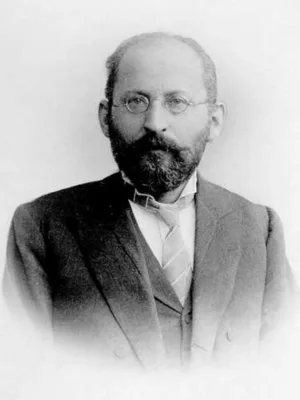
Bernstein (German, 1850-1932) was a preeminent Social Democrat (and executor of Engels’ literary will) who became infamous for his turn away from Marxism. He joined the SDAP in 1872, helped Bebel and Liebknecht prepare the unification conference with the ADAV in 1875, and became a skilled editor of socialist newspapers. He later contributed to the Gotha Program of 1891. Bernstein’s turn away from Marxist orthodoxy appeared in Evolutionary Socialism (1899), in which he argued that the reality of late 19th-century capitalism had diverged significantly from Marx’s forecast. Too important an author and too extensive a critique to be ignored, Rosa Luxemburg responded in Social Reform or Revolution? (1900). Bernstein’s arguments became known as revisionism. He remained in the SPD but broke with the majority over support for World War I and co-founded the USPD. He rejoined the SPD in 1918 and served in the Reichstag during the Weimar Republic.
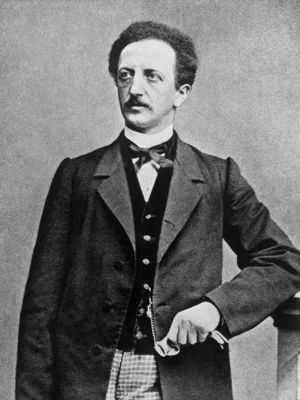
Gary Steenson wrote that Lassalle (German, 1825-1864) was “famous and infamous for his commitment to justice, his flamboyance, his questionable relationships with the countess and other women, and his opportunism. When he died a tragic and silly death in a duel in 1864, he did so in the service of his greatest cause—himself.” Lassalle emphasized working-class political independence (driven by his intense hostility to liberalism) and the fight for universal male suffrage. He imagined a society of state-funded worker cooperatives as the only means of overcoming the iron law of wages. No democratic republican, he sought an ally in Bismarck and William I to support the working class against the liberals. Lih discusses Lassalle’s positive and negative contributions to the German Social Democratic movement.
Iskrapublication
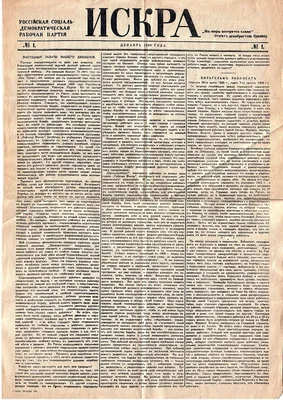
Iskra (The Spark) was founded in 1900. Its motto was “from a spark, a fire will flare up.” It was the official publication of the RSDLP and quickly became one of the most successful underground (illegal) newspapers in Russia. Lenin left the editorial staff in 1903, and the paper was then run by Mensheviks (during which the Bolsheviks called it “the new Iskra”) until 1905. The editorial line championed the battle for democratic freedom, the democratic republic, and socialism. It sought to create the skeleton for a mass social democratic party by uniting the various pockets of social democracy across Russia. Lenin explained that while the SPA could use the Reichstag to spread their message and bring party members together (this was before the Russian Duma), the RSDLP used Iskra.
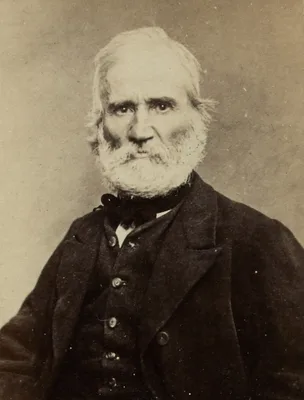
Blanqui (French, 1805-1881) spent most of his life in and out of prison for various attempted revolutionary insurrections. He believed that after taking state power through a coup, the revolutionaries would introduce socialism and acclimate the masses to the good life. Engels wrote that “Blanqui is essentially a political revolutionist. He is a socialist only through sentiment, through his sympathy with the sufferings of the people, but he has neither a socialist theory nor any definite practical suggestions for social remedies. In his political activity, he was mainly a ‘man of action,’ believing that a small and well-organized minority, who would attempt a political stroke of force at the opportune moment, could carry the mass of the people with them by a few successes at the start and thus make a victorious revolution.”
As used in the context of Russia and Lenin’s discussion in What Is To Be Done?, hegemony refers to the necessity of the working class—organized into a political party under the banner of Social Democracy—leading all other classes in the struggle to abolish the Tsar and win a democratic republic. The working class’s understanding of society had to be broad precisely because it was tasked with leading every other social group. Meanwhile, the Economists ceded political hegemony to the bourgeoisie by ignoring the struggle for a democratic republic.
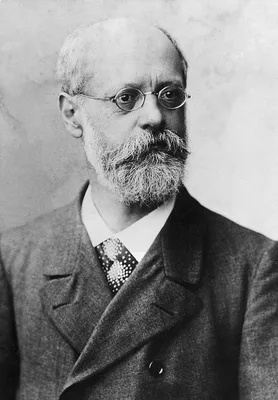
Kautsky (German, 1854-1938) was a leading theorist in the SPD and Second International. He wrote the theoretical section of the SPD’s 1891 Erfurt Program, and his commentary on the program, The Class Struggle, became a popular summary of Marxism. He became increasingly less influential after the end of World War I. Kautsky is most commonly known as a “renegade” for his opposition to the Russian Revolution and acquiescence to the SPD majority’s support for WWI. Much earlier, Kautsky split with Rosa Luxemburg in 1910 over the mass strike question and agitation around the democratic republic. In the end, Kautsky talked the talk, but did not walk the walk; that task was left to Lenin and the RSDLP.
The Revolution of 1848 failed to create a unified Germany from many different German-speaking states. Unification finally came in 1871, and Prussia became the largest and most powerful state in the German Empire (1871-1918). The Prussian King was also the de facto Emperor (Kaiser) of Germany. The German chancellor, Bismarck, was a Prussian Junker (land-owning elite). The Prussian three-class franchise system (used in state elections and not in national parliamentary elections) gave greater weight to the upper classes and made it difficult for the SPD to win elections in Prussia without entering into alliances with other parties. Massive protests over the three-tiered voting system in 1910 sparked a fierce debate over socialist tactics and the demand for a democratic republic between Luxemburg and Kautsky.
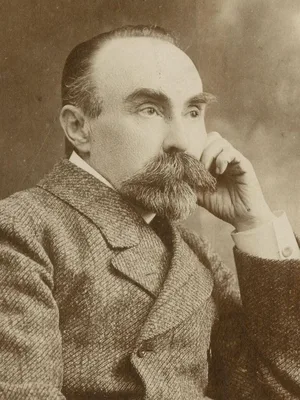
Plekhanov (Russian, 1856–1918) is widely regarded as the founder of Russian Social Democracy. “If we are searching for the common stock of ideas which united and defined a Marxist in Russia in the 1890s, we need look no further than Plekhanov’s works in the 1880s and early 1890s,” writes Neil Harding. Plekhanov founded the Emancipation of Labor group in 1883, the first Russian Marxist organization (based in exile). He later joined the RSDLP, wrote for Iskra alongside Lenin, and aligned with the Mensheviks after 1903.
MUG states that “in every struggle… our role is to tie injustices to the lack of political power held by the working masses.” Socialists fight for reforms. At the same time, we use the struggle for reforms to point out the lack of political democracy and the need for revolution. Reformism loses sight of the fundamentally undemocratic nature of politics and does not tie every struggle back to the need for state power in the form of a democratic republic. Reformists also tend to align with bourgeois parties and thereby sacrifice the working class’s political and programmatic independence.

The Socialist Workers’ Party of Germany (SAPD) was formed in 1875 by the merger of the General German Workers’ Association (ADAV) (1863), led by Lassalle, and the Social Democratic Workers’ Party of Germany (SDAP) (1869), led by Leibknecht and Bebel. It became the SPD in 1890 and adopted the Gotha Program in 1891. The SPD was the center of international Social Democracy and influenced many of the central figures and organizations discussed in the Reader, including Lenin and the RSDLP.
Social Democracy was closely associated with orthodox Marxism before the outbreak of World War I, the success of the Bolsheviks in the Russian Revolution, and the formation of the Communist International. Since then, the term has been associated with reformism and constitutional loyalism, contributing to the marginalization of its earlier, more radical history—a problem this Reader attempts to correct. Social Democrats understood the working class as the agent of socialism and political democracy, emphasized the necessity of winning power through a democratic republic, and identified the private ownership of the means of production as the root of social inequality and exploitation. The name derives from the desire to socialize democracy, or extend democracy as far as possible into human activity.
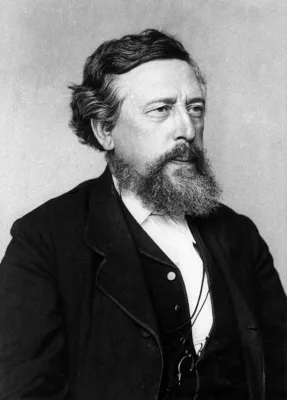
Leibknecht (German, 1826-1900) was one of the most important figures in German Social Democracy. Gary Steenson writes that Liebknecht “provided the early years of the movement with much of its fire. He was a tempestuous, tireless propagandist and organizer who often spoke without due reflection and frequently disconcerted his political allies with outlandish statements.” While living in London, Leibknecht joined the Communist League and developed a lifelong friendship with Marx. Upon returning to Germany, he joined the ADAV and edited a party newspaper. He grew dissatisfied with the party’s coziness with Bismarck, left the ADAV, met Bebel, and founded the SDAP. In 1869, Leibknecht wrote that “socialism and democracy are not identical, but they are simply different expressions of the same principle; they belong together, supplement each other, and one can never be incompatible with the other. Socialism without democracy is pseudo-socialism, just as democracy without socialism is pseudo-democracy.” At the start of the Franco-Prussian War in 1870, he used his editorship at a newspaper to agitate against participation and was subsequently arrested. He uttered the famous phrase “For this system, not one man and not one penny!”
Economism and High Politics
Lars Lih leaves this Russian word untranslated in his translation of What Is To Be Done? It’s often translated as ‘secrecy’ in English, but Lih prefers the term ‘the fine art of not getting arrested.’ By 1914, Moscow was the most policed city in Europe. Social Democrats who practiced Konspiratsiia knew how to keep a low profile and avoid the Russian authorities.
In Russian, Economists downplayed the need for the working class to engage in a political struggle to overthrow the Tsar and win a democratic republic as outlined in the RSDLP’s 1903 Program. They limited the working class struggle to workplace-related issues—assuming the struggle for a democratic republic should be left to the bourgeoisie—and were necessarily localist in their conception of a party. Put simply, they encouraged workers to think small. Though Lenin insisted that What Is To Be Done? spoke only to a particular moment in Social Democratic history, Economism is still a major force in the socialist movement. MUG’s emphasis on connecting every issue back to the need for a democratic republic and workers’ political power is antithetical to Economism.
Lars Lih leaves this Russian word untranslated in his translation of What Is To Be Done? Lih writes: “Usually translated as ‘spontaneity’ and sometimes ‘elemental.’” As a good Social Democrat, Lenin castigated the tendency within Russian Social Democracy that said socialism would spontaneously develop within the working class. Contra orthodox Marxism, this tendency downplayed the need for a nationwide party and flowed easily into Economism.
Lih writes: “Found in the phrase ‘kow-towing to stikhiinost’ that Lenin uses as a catch-all for the sins of his opponents. Translated by others as ‘bowing’ or ‘worshiping’ stikhiinost. I chose ‘kow-towing’ to bring out the idea of abject devotion.” Practitioners of kow-towing downplayed the need for the leadership of a programmatically united party in the struggle for democracy and socialism. They were not interested in raising the consciousness of the working class.
DSA should not follow or “tail” whatever demand is currently popular (case in point: DSA’s support for Proposition 50 in California). Instead, we must put forward our analysis of events and center the need for political democracy and socialism. Winning people to our program of change requires standing by our views and winning other people to our position. Similarly, the working class must not tail the Democratic Party or any other constitutional-loyalist organizations.
Lars Lih leaves this Russian word untranslated in his translation of What Is To Be Done? Lih writes: “Tred-iunionizm does not primarily mean ‘activities associated with trade unions’ but rather ‘the ideology that urges the workers to limit themselves to trade unions.’ By definition, tred-iunionizm is the enemy of social democracy.” Most labor unions are good examples of tred-iunionizm in the way they seek to hold worker activity within the limits of apolitical labor struggles. This is essentially Economism.
Martynov (Russian, 1865-1935) was a leading Menshevik politician before 1917. He was chief editor of Rabocheye delo from 1901-2 and a leading proponent of Economism.
By “Social-Democratic Lomonosovs,” Lenin meant working-class intellectuals who, like Mikhail Lomonosov (1711-1765), could rise from humble origins—but whose development, he argued, required conscious party organization and intervention, rather than reliance on spontaneous activity as argued by the Economists.
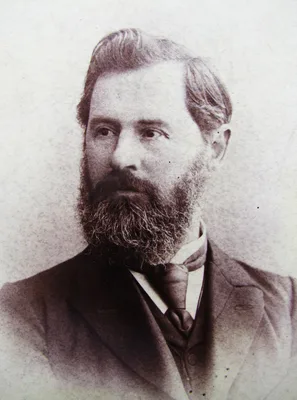
Akselrod (Russian, 1850-1928) was a founder of Emancipation of Labour (1883-1903), the first Russian Marxist group. Lenin wrote that the group “laid the theoretical foundations for the Social-Democratic movement and took the first step towards the working-class movement.”
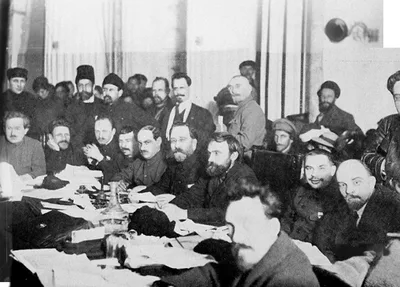
The Bolsheviks became a faction within the RSDLP that later developed into a distinct party. Neil Harding is quick to point out that “it was not until 1905 and especially 1906 that clear differences between the factions [Bolsheviks and Mensheviks], in political strategy and understanding of the objectives of the democratic revolution, first became apparent.” Lars Lih debates the differences that existed between the Mensheviks and Bolsheviks in the lead-up to 1917. During the Second Congress of the RSDLP in 1903, a vote was held over party membership rules and editorial control over Iskra. Lenin and his supporters won a majority during key votes and were given the nickname Bolsheviks (“majority”). The opposition was labeled Mensheviks (“minority”). The Bolsheviks held a majority on the RSDLP’s central committee by 1912. But, argues Lih, they did not see themselves as a distinct party—not yet. This is a significant point, as the later Soviet Communist Party denied Lenin’s toleration of party factions. The Bolsheviks defended the independence of the RSDLP against eventual Menshevik “liquidationism,” an attempt to legalize the underground core of the party by granting programmatic concessions around socialism and the democratic republic. In October 1917, the Bolsheviks used their majority support in key worker and soldier Soviets to seize state power.
The Mensheviks were a faction within the RSDLP that became a clearly distinct political force by 1917. Julius Martov (Russian, 1873-1923) was a leading figure. Historians, including Lars Lih, continue to debate the differences that existed between the Mensheviks and Bolsheviks in the lead-up to 1917. During the RSDLP’s famous Second Congress in 1903, the Mensheviks favored a broader and more open party structure. Around 1912, a majority (but not all) Mensheviks favored “liquidating” the RSDLP’s underground (the party’s core) by seeking legal status. This would have meant programmatic concessions with liberal constitutionalists who did not endorse a democratic republic. In 1917, the Mensheviks supported Kerensky’s Provisional Government, arguing that the coming revolution would be led by the liberal parties and would not immediately threaten private property. This meant opposing the Bolsheviks’ demand for immediate transfer of state power and ending the war. After the October Revolution, the Mensheviks existed as a legal party before being banned and fading away.
Using the example of Wilhelm Liebknecht, Lenin describes the people’s tribune as someone who uses their platform (usually an elected position) to speak against the existing political and social order and advertise the party program. The tribune expands the workers’ political horizons by speaking against every abuse perpetrated against any section of society. The RSDLP used Iskra as its tribune before the creation of the parliamentary Duma in 1907. After the Duma was granted as a concession by the Tsar, RSDLP representatives were expected to act as tribunes by following the party program and demanding the establishment of a democratic republic through a constituent assembly. Failure to follow the party program was noted, and representatives were held to account. MUG wants DSA to adopt a program that centers on the need for a democratic republic and socialism. DSA electeds should serve as tribunes for that program, as stated in YDSA’s Winning the Battle for Democracy resolution.

The SRs were formed in Russia in 1902. They called for the abolition of Tsardom and the confiscation and redistribution of large landholdings, especially those owned by Russia’s nobility. Their program included acts of individual terror. The SRs split into a right and a left, with the former supporting the Provisional Government and World War I after February 1917 and the latter opposing the war and supporting the Bolsheviks. The Left SRs joined the Bolsheviks in a coalition government after the October Revolution, but left the government after the signing of the Treaty of Brest-Litovsk.
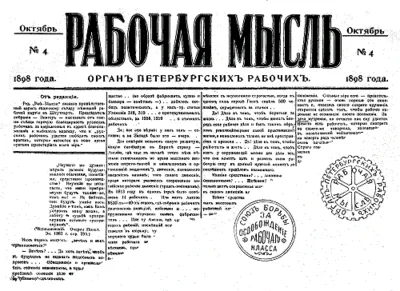
Rabochaya mysl (Workers’ Thought) was the political newspaper of the economist-dominated Petersburg Committee of the RSDLP. It ran from 1897 until 1902.
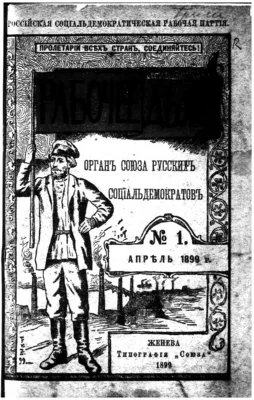
Lenin famously polemicized against the editorial staff of Raboche delo (The Workers’ Cause) in What Is To Be Done? The paper ran from 1899 to 1902, and Aleksandr Martynov was the editor after 1900. Like Rabochaya mysl, its editorial line centered economic struggles as the basis for all social democratic activity and eschewed the struggle for a democratic republic. Lenin wrote that it expressed the “distinguishing feature of an entire period in the history of Russian Social-Democracy”—a period that needed to be overcome.

The RSDLP was formed in 1898 through a merger of various Marxist groups, including the Saint Petersburg League of the Struggle for the Emancipation of the Working Class, Emancipation of Labor, and Jewish Labor Bund. The party was banned in Russia, and its members were arrested. It didn’t exist as a cohesive and functioning party until 1903. It began printing Iskra in 1900 and held its Second Congress in 1903, during which it adopted a program calling for the overthrow of the Tsar and the establishment of a democratic republic. A major power struggle took place within the party between 1899 and 1903 between the orthodox Social Democrats and Iskra on one side, and the Economists and Raboche delo and Rabochaya mysl on the other. Lenin wrote What Is To Be Done? in the context of that struggle and in the lead-up to the immensely important Second Congress. The RSDLP contained different factions over the years, including the Bolsheviks and Mensheviks. The RSDLP took part in the last three Russian State Dumas. In 1918, it changed its name to the Russian Communist Party.
The Classical Minimum-Maximum Program
Founded in 1862, the ADAV was the first working-class political party in Germany. Lassalle was brought to the party’s founding congress and quickly became its president. Many ADAV members left the party due to the dictatorial habits and pro-Prussian sentiments of its second president, J.B. von Schweitzer. Most ADAV members supported Germany in the Franco-Prussian War before the capture of Napoleon and the transformation of a defensive war into a war of aggression. In 1875, the ADAV merged with the SDAP to create the SPD.
According to Lars Lih, this term was originally used by the Mensheviks in 1905 and soon after by the Bolsheviks. A Menshevik resolution stated that according to the principles of democratic centralism, “all party members take part in the election of party institutions; all party institutions are elected for a [specified] period, are subject to recall and obligated to account for their actions both periodically and at any time upon demand of the organizations which elected them. Decisions of the guiding collectives are binding on the members of those organizations of which the collective is the organ.” A later Bolshevik resolution stated that “departures…from fully democratic procedures are permitted only in the event of insurmountable practical obstacles.” Today, the phrase “democratic centralism” is often used to hide the rule of a bureaucratic clique (bureaucratic centralism) over the party rank-and-file.
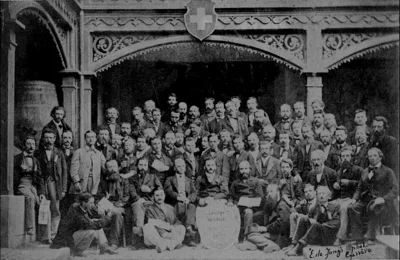
Also known as the International Workingmen’s Association (IWA), the First International (1864-1876) was a collection of political groups and trade unions united around international solidarity projects and discussion about working-class stances toward pressing issues. Marx made the group’s famous “Inaugural Address.” Mike Macnair describes it as a “movement of the whole class” because it was not based on a clear political platform, unlike the Second International. Famously, Marx and Bakunin clashed over questions of the role of the state in the transition to socialism and internal organization. The IWA was harassed and hunted out of existence after the Paris Commune.
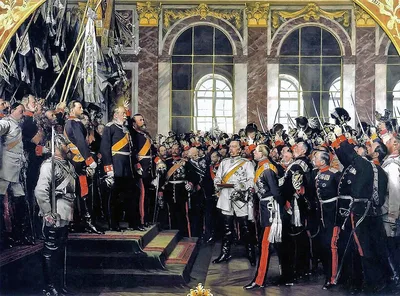
The Franco-Prussian War (July 19, 1870 - May 10, 1871) is most relevant for ending the Second French Empire of Napoleon III, leading to the creation of a unified Germany, and precipitating the establishment of the French Third Republic. The Paris Commune (March 18 - May 27, 1871) was a direct result of the war, as Parisians attempted to defend the city after the new French government fled to Versailles. Before the Commune, the war forced the government to expand the National Guard and put arms in the hands of workers.
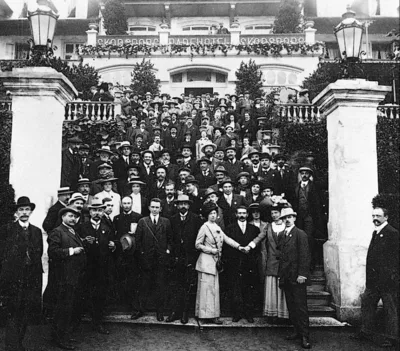
The Second International was formed in 1889 and dissolved in 1923. Second International parties were membership-based and largely democratic, with competing factions, competitive elections, and a robust party press. They grappled with how to use the political arena (the US House of Representatives, the Russian Duma, the German Reichstag, etc.) to spread the ideas in their various programs. Macnair argues that many of the parties that joined the Second International were formed through a “snowball effect” or the fusion of several different groups. Several events stand out in the history of the Second International, including the rise of revisionism in Germany (see Bernstein) and the Millerand debates in France (see Alexandre Millerand).
The SPA was formed in 1901 through a merger between the Social Democratic Party of America (SDP) and elements of the Socialist Labor Party of America (SLP). The party was one of two other parties in the Second International (The RSDLP and the Italian Socialist Party) to oppose World War I. Eugene Debs was the SPA’s candidate for president in 1904, 1908, 1912, and 1920. The SPA elected two US representatives (Victor Berger and Meyer London) and more than 100 mayors. Many members left the party for the Communist Party USA after the Russian Revolution.
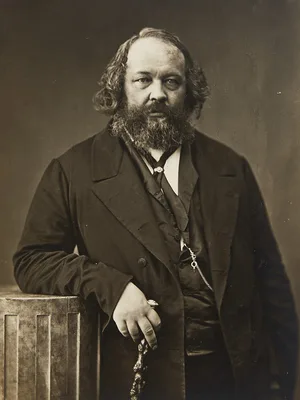
Bakunin (Russian, 1814-1876) spent decades in prison and exile. He became an immensely influential anarchist despite attempts to silence him. He believed in the need for a socialist society, writing that society should be organized so that “every individual, man or woman, should find, upon entering life, approximately equal means for the development of his or her diverse faculties and their utilization in his or her work.” Contra Marx, Bakunin thought workers (and perhaps peasants) would spontaneously organize and do away with the state once and for all. Also unlike Marx, he had no time for political democracy or the democratic republic as the future workers’ state. “Bakuninism” is associated with hostility toward politics and democracy and a strategic orientation toward mass strikes and conspiracy.
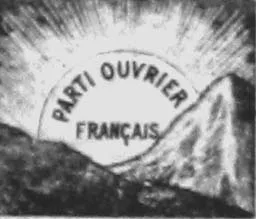
The Parti Ouvrier (1880-1902) was a socialist party created in 1880 by Jules Guesde and Paul Lafargue. Marx wrote the introduction to the party’s program. In 1902, the party merged with the Blanquist Central Revolutionary Committee to create the Socialist Party of France, which in 1905 merged with Jean Jaurès’ French Socialist Party to form the SFIO, the French section of the Second International.
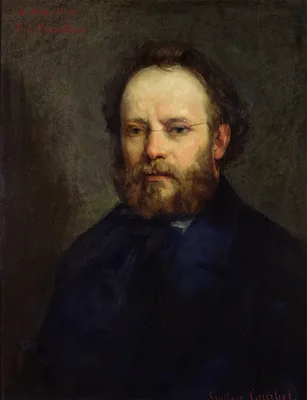
Proudhon (French, 1809-1865) is regarded as anarchism’s most influential theorist, responsible for such well-known phrases as “property is theft” and “anarchy is order without power.” He proposed a system of workers’ councils, cooperatives instead of private ownership or nationalization, and credit unions. Proudhon thought that strikes were ineffective and counterproductive because of a faulty assumption that any increase in wages necessarily meant an increase in prices. He shunned political intervention and encouraged workers to create communities in which workers would get the full value of their labor (an erroneous position critiqued by Marx in Critique of the Gotha Program). Kautsky stated that “Marxism substituted the organization of the economic struggle - the strike organization, the union - for the peaceful economic organizations of the petty-bourgeois Proudhonism….” Proudhonists made up a large section of the First International and the Communards in the Paris Commune before political socialism won out.
Party of a New Type?
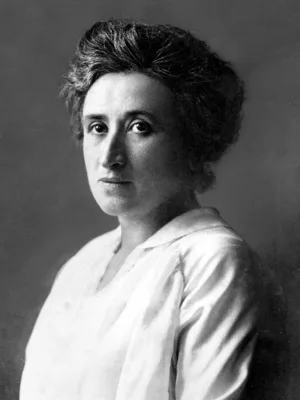
Luxemburg (Polish, 1871-1919) was a leading Social Democrat and eventual member of the SPD. She wrote a leading work against Bernstein’s revisionism and worked closely with Karl Kautsky before splitting with him in 1910 over the Prussian suffrage movement (an event that arguably allowed her to see Kautsky’s developing renegade tendencies before Lenin). After 1914, she co-founded the anti-war Spartacist League (later the Communist Party of Germany) that broke with the SPD and opposed the SPD-led government that led the German Republic after the end of World War I. She supported the October Revolution while making important critiques of Lenin and Trotsky for making a virtue out of the necessity of sacrificing the Russian constituent assembly (January 1918) and parliamentary democracy.
The reign of an unaccountable bureaucracy over the party. Bureaucratic centralism is the opposite of democratic centralism in that the rank-and-file have no formal mechanism by which to subject the higher-ups to their collective will and no formal right to organize oppositional factions and publish their views. Most bureaucratic centralist groups abuse the term “democratic centralism” to give legitimacy to the authority of a select few party members.
The Comintern, or Third International, was founded in 1919 by Lenin, Trotsky, Grigory Zinoviev, Karl Radek, and Nikolai Bukharin. It was dissolved by Stalin in 1943. The Comintern was formed after the failure of the Second International to oppose World War I. The Bolsheviks held a dominant position in the body, so much so that some called it a fan club for the Russians. International revolution through civil war seemed imminent, and the Bolsheviks were the only successful example of a revolutionary party. The Conditions of Admission to the Communist International were created in 1919 and formally adopted one year later. A new conception of the Bolshevik Party and the ideal “party model” was established and exported across the world.
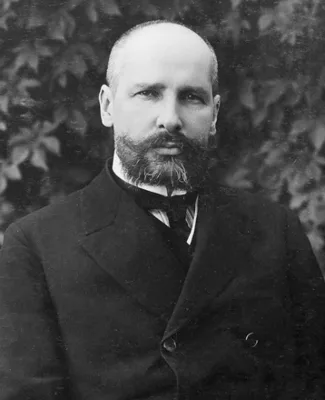
Stolypin (Russian, 1862-1911) was the third prime minister and the interior minister of the Russian Empire under Tsar Nicholas II during the Duma period, starting in 1906 until his assassination in 1911. He advocated social and economic reforms that clashed with the Tsar’s prerogatives and fell short of assuaging the desires of the peasants and workers. He instituted a brutal system of martial law in an attempt to quell dissent.
The name was given to a faction of the RSDLP that existed between the first and second revolutions and called for an end to illegal party activity after legal channels were opened. The liquidationists held the British Labour Party as an ideal party model. More generally, liquidationism refers to an abandonment of the idea that the organized working class should play the leading role in the fight for political democracy and socialism. In our context with the DSA, liquidationists deny the need for a socialist organization to have an independent political line centered on the establishment of a democratic republic and socialism.
Though used in different contexts, opportunism is essentially the act of sacrificing the long-term interests of the working class for an immediate benefit, be it real or imagined. It was opportunist for the SPD to support Germany in World War I in the name of defending the German working class because, in doing so, they sacrificed the long-term project of building a political force based on internationalism and opposition to the Reich government. It would also be opportunist for a socialist party to mute its criticism of the Democratic Party to win reforms for the working class.
The Strategy of Patience
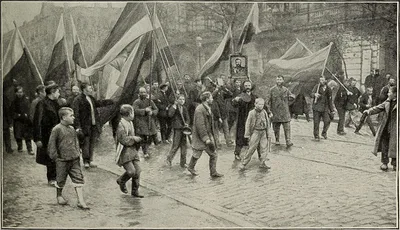
A monarchist, antisemitic, and ultra-nationalist movement in Russia in the early 20th century that supported the House of Romanov and unbridled autocracy. Many black-hundredist organizations (including the League of the Russian People, League of the Archangel Michael, and Council of United Nobility) formed during and after the Russian Revolution of 1905 to support Tsar Nicholas II by way of mass terror and pogroms. The Black Hundred were composed primarily of landowners, rich peasants, bureaucrats, merchants, police officers, and clergymen. Lenin explains that it was in the name of stopping the Black Hundred that the Mensheviks counseled reconciliation with the constitutional monarchist Cadets in the Duma.
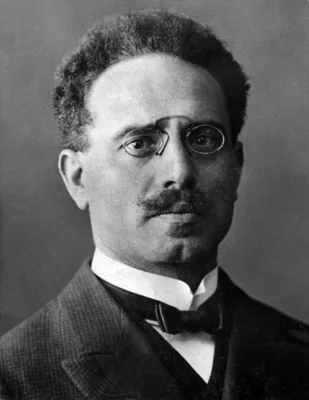
Liebknecht (German, 1871-1919) was a leading member of the SPD and the son of Wilhelm Liebknecht. He joined the party in 1900 and became a representative in the Prussian House of Representatives. After 1914, he was often refused the parliamentary floor over opposition to World War I and was eventually expelled from the SPD in 1916. He helped form the Spartacist League, which broke from the SPD in 1918. He worked closely with Rosa Luxemburg until she and he were murdered in 1919.
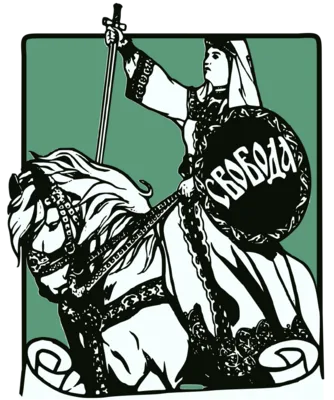
The Cadets were established by Pavel Milyukov after the 1905 Revolution and the announcement of the October Manifesto and the State Duma. At first, the Cadets demanded universal suffrage and a constituent assembly to determine the country’s next form of government. After the Tsar dissolved the first Duma, Milyukov called for passive resistance, including non-payment of taxes and draft avoidance. After 1906, the Cadets fought for a constitutional monarchy and were openly hostile to the idea of a democratic republic. They fought to save the monarchy in February 1917 and supported the invading foreign powers after October.
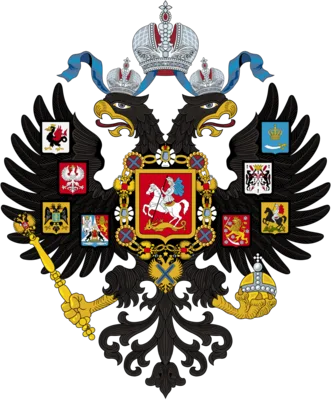
Tsar Nicholas II (1868-1918) and Prime Minister Sergei Witte (1848-1915) were forced to grant concessions after the 1905 Russian Revolution. Adopted in 1906, the October Manifesto created the State Duma, a lower house in a parliamentary body with supposed legislative and oversight powers. The First Duma lasted from April 27 to July 8th, 1906; the Second, from February 20th to June 3rd, 1907; the Third, from November 7th, 1907, to June 3rd, 1912; the Fourth, from November 15th, 1912, until October 6th, 1917. Though given nominal legislative power and advertised as a check on the Tsar, Nicholas retained veto power and the ability to dissolve the Duma at will. The upper house, the State Council of Imperial Russia, was composed of nobles appointed by the Tsar and could block any law presented by the Duma. Representatives were chosen unequally from six blocks: landowners, city inhabitants, peasants, workers, Cossacks, and non-Slavic people. The RSDLP boycotted the First Duma but participated in the next three.

Soviets were elected councils of workers, soldiers, and peasants that emerged during the 1905 Russian Revolution and reappeared following the February Revolution in 1917. The new Provisional Government competed with the Soviets for control over the workplace and army barracks. Revolutionary groups—including the Bolsheviks, Mensheviks, and Socialist Revolutionaries—struggled for leadership within the soviets. The Bolsheviks gained majorities in key urban soviets, including the Petrograd Soviet and the Moscow Soviet, by the eve of the October Revolution.
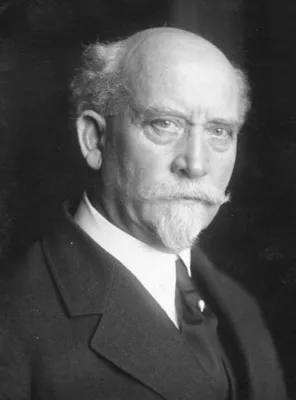
Scheidemann (German, 1865–1939) was a member of the SPD and a deputy in the Reichstag. He became chairman of the SPD’s parliamentary group after the death of August Bebel in 1913. Scheidemann cautiously supported government participation in World War I and sought to head off the SPD’s left wing in 1918 by declaring Germany a republic before Karl Liebknecht. After 1918, he worked with Friedrich Ebert (1871-1925) in the SPD-led government to suppress the left, including the killings of Liebknecht and Rosa Luxemburg.
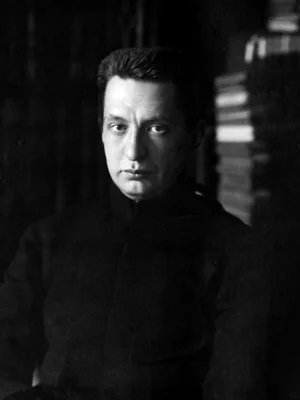
Kerensky (Russian, 1881–1970) was a leading figure in the Provisional Government after the February Revolution. He tried to maintain a liberal-socialist coalition while continuing Russia’s participation in World War I—an increasingly unpopular position. His government was further discredited after the attempted military coup by Lav Kornilov (whom Kerensky had initially supported).
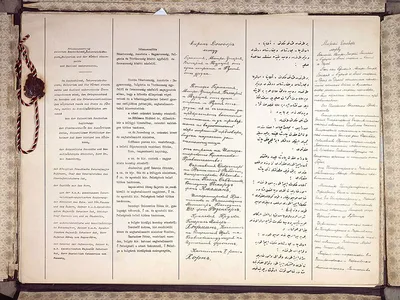
The Treaty of Brest-Litovsk was signed in March 1918 between the Russian Soviet Federative Socialist Republic and the Central Powers, ending Russia’s participation in World War I. It imposed harsh territorial losses on Russia, including Ukraine, Belarus, Poland, and the Baltic states. Russia ceded control of vast economic resources. Lenin accepted the treaty reluctantly, seeing it as necessary to consolidate Bolshevik power and survive the war. It was deeply unpopular among many Russians, including left-wing Bolsheviks and Socialist Revolutionaries.
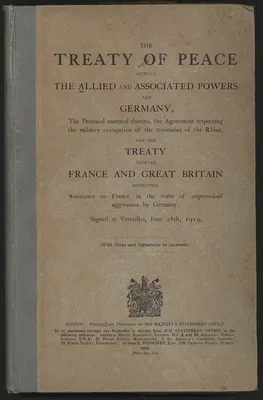
The Treaty of Versailles formally ended World War I and created the League of Nations. Negotiated primarily by the leaders of Britain, France, and the United States, it imposed heavy reparations, territorial losses, military restrictions, and the “war guilt” clause on Germany.
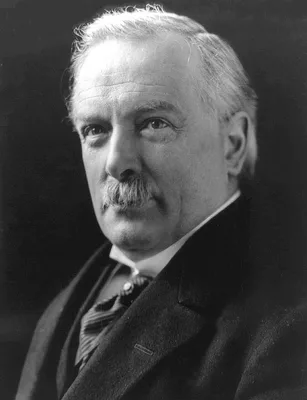
George (1863–1945) was a leading figure in the British Liberal Party and became Prime Minister in 1916 during World War I. He advocated for vigorous prosecution of the war while implementing social reforms at home to maintain popular support.
Anti-Coalitionism in Liberal Constitutional Regimes
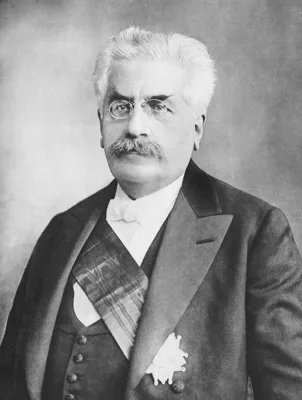
Millerand (French, 1859-1943) sparked a debate in the Second International when he joined the government of René Waldeck-Rousseau (1846-1904) in the name of defending the French Third Republic (1871-1940) from monarchist and clerical usurpers during the height of the Dreyfus Affair. His decision led to the condemnation of parliamentarism at the Amsterdam Congress of the Second International (1904) and the unification of the French Socialist Party based on opposition to participation in bourgeois governments. He was the leader of the Independent Socialists (SI), a diverse group united around a refusal to affiliate with an organized party and a belief that their political mandate came from the voters and not a party line. As Prime Minister of France in 1920, Millerand supported the counterrevolutionary White Army against the Bolshevik Red Army.
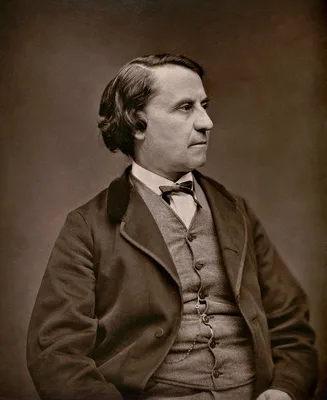
Blanc (French, 1811-1882) had an immense impact on the development of French socialism. He became a member of the provisional government following the Revolution of 1848. He believed competition was at the root of all social ills and advocated for state-funded cooperatives to employ city workers toward harmonious ends. He was forced into exile after attempts to empower workers from within the government failed, and the workers were instead shot down in the streets by the troops of the “revolutionary” government. “Blancism” is associated with reformist socialism: working within the existing state to bring about various reforms without a political and social revolution.
The Junkers were members of the Prussian landed nobility. They held massive estates that were worked by peasants with no rights. They had immense political influence and controlled the Prussian army. It was said that “if Prussia ruled Germany, the Junkers ruled Prussia, and through it the Empire itself.”
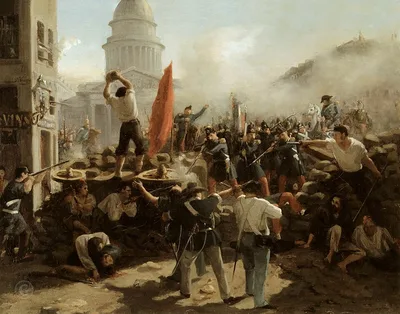
The Revolutions of 1848 remain the largest and most widespread revolutionary wave in European history. Demands included the establishment of a constitution and popular sovereignty, the abolition of serfdom, freedom of the press, and economic rights. Though some victories were won, the revolutions were ultimately defeated. Observing the aftermath, Marx argued that the liberal bourgeoisie was unreliable and conservative in revolutionary situations, and that the working class had to organize independently as a political force. Three of his most famous works—The Communist Manifesto, The 18th Brumaire of Louis Bonaparte, and The Class Struggle in France—were all written in the context of the revolutions. Revolutionaries were forced into exile, with many fleeing to the United States and later joining the abolitionist struggle. Jonathan Sperber and Christopher Clark have written histories of the period.
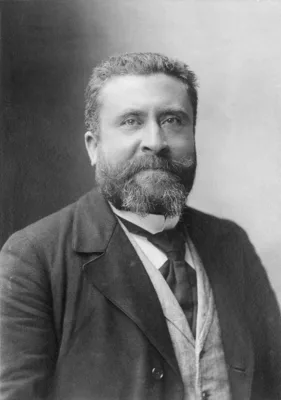
Jaurès (French, 1859-1914) was an immensely influential figure in late 19th and early 20th-century French politics. In 1905, he helped form the French Section of the Second International, the SFIO. Jaurès defended Alfred Dreyfus, writing in The Socialist Interest (1898) that socialists must condemn all attacks on the Rights of Man and link every abuse back to the need for socialism and democracy. During the Dreyfus Affair, he argued that the working class is the “most threatened… by the arbitrary actions of generals, by the glorified violence of military repressions,” and must “punish and discourage the illegalities and violence of courts martial before they become a kind of habit accepted by all.” Harvey Goldberg wrote one of the few biographies of Jaurès.
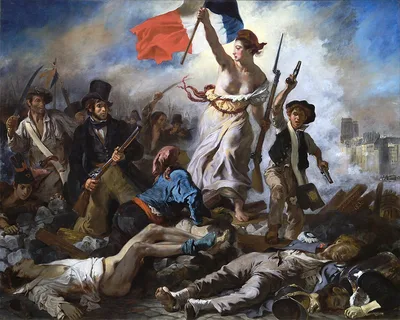
The French Revolution of 1830 overthrew the conservative Bourbon monarchy of Charles X (1757-1836) and brought Louis-Philippe (1773-1850) to power as “King of the French.” The uprising was driven by opposition to reactionary policies, censorship, and limits on parliamentary power. It was largely led by liberal and middle-class forces rather than the working class. The July Revolution established the July Monarchy (1830-1848), which promoted constitutional monarchy and bourgeois liberalism, but failed to address social inequality or revolutionary demands from workers and peasants.
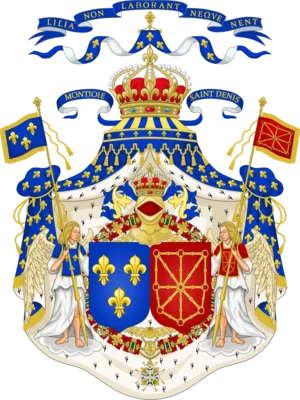
The Estates-General was a representative assembly called by Louis XVI (1754-1793) to address the French kingdom’s financial crisis. It brought together delegates from the three estates: the clergy (First Estate), the nobility (Second Estate), and the commoners (Third Estate). Disputes over voting procedures and the underrepresentation of the Third Estate led to its breakaway and the formation of the National Assembly, beginning the French Revolution.
The Jacobin Constitution of 1793 was drafted during the French Revolution under the influence of the Jacobin Club and Maximilien Robespierre (1758-1794). It established universal male suffrage, unicameralism, extensive democratic rights, and social and economic reforms, including the right to work and public assistance. Though the Constitution was never implemented, Marx and Engels saw it as a model for working-class political control.
Decolonization
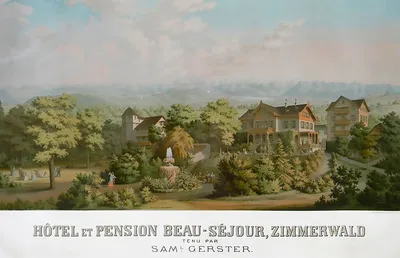
The Zimmerwald Manifesto was issued by a group of socialist leaders who met in Zimmerwald, Switzerland, in September 1915 during World War I. The manifesto condemned the war as imperialist and called on workers to oppose their governments’ war efforts and maintain international solidarity. Lenin and Trotsky signed the Manifesto.
Revolutionary Defeatism is the stance taken by some socialists, most associated with Lenin, during the first World War, that the proletariat of each imperialist nation should be in favor of its nation’s defeat, as their enemies are the capitalists of their nation, and the defeat of the nation in an imperialist war would be a serious blow to the capitalists of the nation.
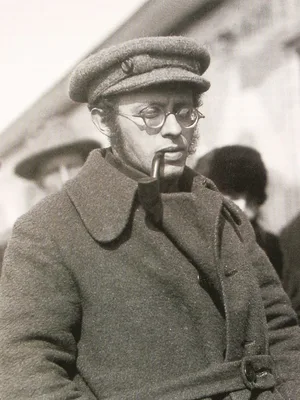
Radek (1885-1939) was a truly international revolutionary. Born in Lviv to a secular Jewish family enmeshed in the Austro-Hungarian civil service, as a child he moved around Austrian-ruled Galicia, eventually joining the SDKPiL (Social Democracy of the Kingdom of Poland and Lithuania) as a student, going on to get arrested in Warsaw participating in the Russian Revolution of 1905. He’d escape prison and flee to Germany where he started working in the SPD, eventually becoming the center of a messy dispute regarding his membership status in the parties of the Second International known as The Radek Affair. He would join Lenin and many others in exile in Switzerland at the outbreak of World War I, where he would participate in the Zimmerwald Conference, partial to the left. After the outbreak of the Russian Revolution he would move to Saint Petersburg to participate as a member of the Soviet government, then being deployed to Berlin to assist the German Revolution, where he would be part of the founding of the KPD (Communist Party of Germany). Arrested again, upon release a year later he would return to the Soviet Union and work in the Comintern. He would eventually be expelled from the party in the late 20s, readmitted, and then fall victim to the great purge, dying in a labor camp in 1939.
Lenin uses this term to describe socialists who support their own nation’s ruling class in imperialist war. Most major socialist parties supported WWI, including the SPD majority. Kautsky was not an enthusiastic supporter of the war, but he refused to break with the pro-war leadership of the SPD (until 1917 when he joined the USDP) in the name of maintaining unity.
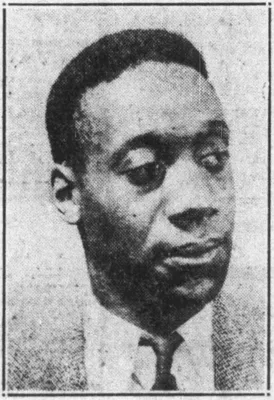
Definition coming soon.
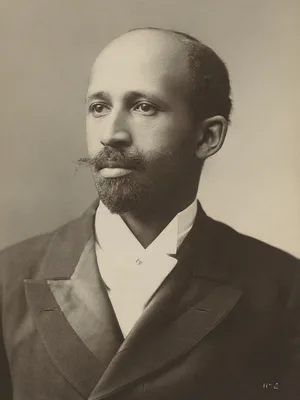
William Edward Burghardt Du Bois was a black sociologist and activist whose life and work spanned from the late 1800s to the 1960s. A founder of the NAACP, later a member of the Communist Party, and a pan-africanist who died in exile in Ghana, he contributed to innumerable impactful efforts in the history of the black struggle, as an organizer and as a scholar. From his early work conducting sociological studies of the life of the black population in Philadelphia, to his challenging of the hegemonic views of Booker T. Washington and the Tuskeegee Institute, to naming and editing the NAACP’s monthly paper The Crisis, to participating in the First Pan-African Congress, to fighting against the dominant racist historiography on Reconstruction with his mammoth 1935 study Black Reconstruction in America, to playing a key role in presenting the petition for recognition of the US’s genocide against black americans We Charge Genocide to the UN upon its founding, to working on the Encyclopedia Africana under the patronage Kwame Nkrumah and the Ghanaian government in his last years while living in Accra, his work spanned decades and is beyond summary.
Definition coming soon.
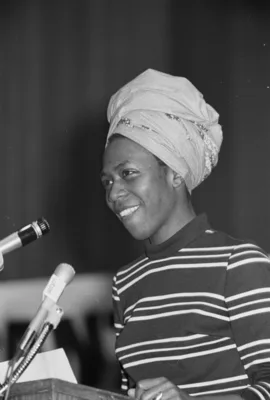
Shakur (African-American, 1947-2016) was a central figure of the New York City chapter of the Black Panther Party. Born in North Carolina, Shakur grew up in the Bronx as a teenager, and would be one of the first members of the BPP in NYC when they opened their Harlem office in 1968. In 1969 she would be arrested as one of the Panther 21, 21 NYC panthers arrested and put through 2 years of legal fights over false claims of conspiracy to bomb public spaces in NYC. Representing herself at trial, Shakur’s work in court would be central to the Panther 21’s success in the legal fight which got their charges dropped. Shakur was one of the first of the Panther 21 whose bail the BPP paid, so that she could fight for the other members incarcerated. While out on bail (her bail would be revoked shortly after, an issue which would become key to the demands of the NYC jail Branch Queens Rebellion of October 1970, a precursor to the Attica Revolt), Shakur participated in the Revolutionary People’s Constitutional Convention, particularly in an event run by the Gay Liberation Front, inspired by the GLF’s rallying outside her jail cell in support of her, an action which was controversial enough in the movement at the time it itself was the cause of the split that formed the GLF. After the final release of the Panther 21 in 1971, at the height of the chaos and paranoia of the BPP split (of which the Panther 21 case was central), Shakur left the party but continued doing vital work in the movement as a paralegal, and was on the ground in Attica during the Attica revolt in September 1971 to coordinate the transfer of prisoners to a non-imperialistic country, one of the revolt’s 5 demands. In 1971 she gave birth to the future rapper Tupac Shakur, and as she fell into a period of struggles with addiction they left New York. She’s perhaps most known for being the subject of Tupac’s song, ‘Dear Mama’. She would outlive her son, and go on to manage his estate for the next 20 years until her passing in 2016.
Definition coming soon.
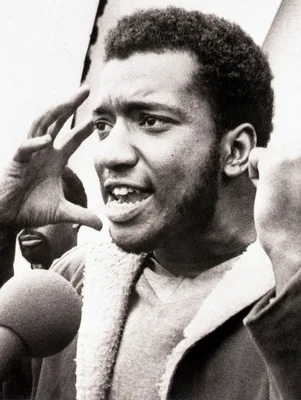
Hampton (African-American, 1948-1969) was the chairman, and one of the founders of the Illinois chapter of the Black Panther Party, based in Chicago. First getting involved in the Black Liberation Movement in school activism at his high school in Maywood (a Chicago suburb with a large black population) as a teenager, he would go on to lead the youth section of the Maywood NAACP after graduating. Establishing the Illinois BPP chapter with Bobby Rush in 1968 at age 20, in his just over a year as chairman of the chapter he would have a great impact, being known for leading multi-racial coalition-building efforts in Chicago under the name The Rainbow Coalition a year before the national BPP started its push for the United Front Against Fascism/National Committees to Fight Fascism, and also being known as the face of the BPP in Chicago through the protests against and police riot at the ‘68 DNC Convention in the city, and the Days of Rage national action organized by the Weathermen in ‘69. In December 1969, after just over a year as chairman of the Illinois chapter, Fred Hampton and Peoria BPP leader Mark Clark were assassinated at 4:30am by the FBI through a special Chicago police unit they had created after a meeting of Illinois BPP leaders at Hampton’s home. Hampton would go on to be one of the BPP’s most well-known martyrs.
The Young Lords was an organization of young diasporic Puerto Ricans primarily in Chicago in New York City contemporary to and heavily inspired by the Black Panther Party, aiming to apply the same methods to the struggles of Puerto Rican communities in the USA.
English economist John Maynard Keynes advocated for capitalist government spending money on welfare programs in order to boost the growth of their national economies, a theory that would go on to be called Keynesianism. ‘Military Keynesianism’ is a term often applied to politicians advocating for high military spending in order to boost the national economy.
Definition coming soon.
Structural Adjustment often refers to political requirements imposed upon countries in order to receive loans from the IMF and World Bank. These requirements are normally for increased austerity. It is essentially a mandatory relinquishing of sovereignty in order to be integrated into global capitalist economic structures.
Fight the Constitution, Demand a New Republic
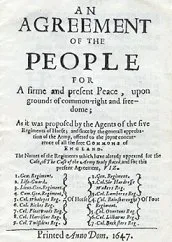
The Levellers were a radical political movement in England during the English Civil War (1642-51). Using petitions, pamphlets, and agitation within Parliament’s New Model Army, the Levellers advocated for popular sovereignty, extended suffrage, equality before the law, and religious toleration. At the heart of their program was the idea that sovereignty should reside in a unicameral legislature, elected through semi-universal and equal manhood suffrage, and fully accountable to the people. They insisted that the House of Commons, not the King or the Lords, should be the supreme and sovereign political authority. Richard Tuck argues that the Levellers developed the eighteenth-century notion of the inalienable rights of mankind.
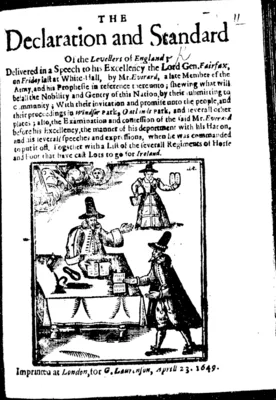
The Diggers were a radical, agrarian socialist group in England during the 1640s, in the aftermath of the English Civil War. Led by Gerard Winstanley (1609-1676), they advocated for common ownership of land, abolition of private property, and communal farming. The Diggers attempted to establish small egalitarian communities on common land, which were ultimately suppressed.
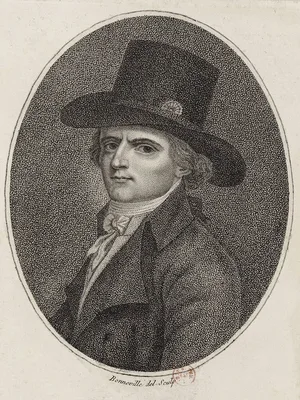
Babeuf’s Conspiracy of Equals (May 1796) was a failed coup to overthrow the French Directory and establish an egalitarian and communal society inspired by the Jacobins. Led by François-Noël Babeuf (French, 1760-1797), the movement sought to abolish private property and implement economic equality. Marx saw Babeuf and his followers as early proletarian revolutionaries. He also acknowledged the conspiracy’s lack of broad support. Ultimately, they were doomed by the absence of a mass working-class base.
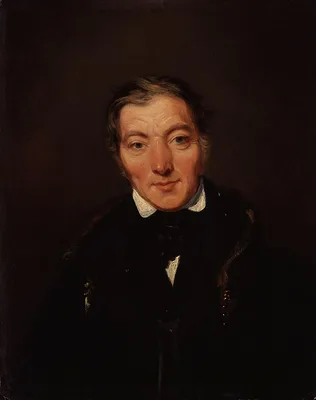
Owen (Welsh, 1771-1858) was a utopian socialist who sought to better the condition of the working class through cooperatives and planned communities. In 1824, he moved to the United States and built an experimental socialist community at New Harmony, Indiana. Like other utopian socialists, Owen and his followers rejected universal and equal suffrage and the struggle for political power for top-down, technocratic solutions.
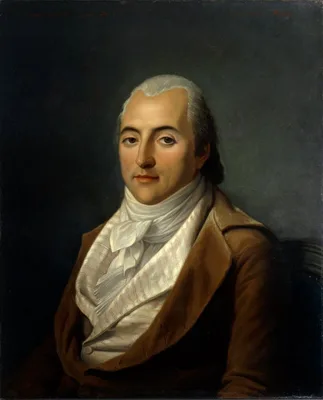
Saint-Simon (French, 1760-1825) was a utopian socialist who developed a theory distinguishing productive and nonproductive classes. His idea of the working class included all people who contributed to society. Marx and Engels critiqued Saint-Simon and other utopian socialists (The Communist Manifesto, Socialism: Utopian and Scientific) while acknowledging their contribution to Marxism and the later Social Democratic movement.
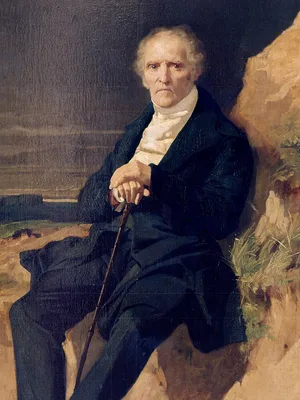
Fourier (French, 1772-1837) was another leading utopian socialist. He was concerned with cooperation and creating societies that fostered it. He was also an early supporter of women’s rights.